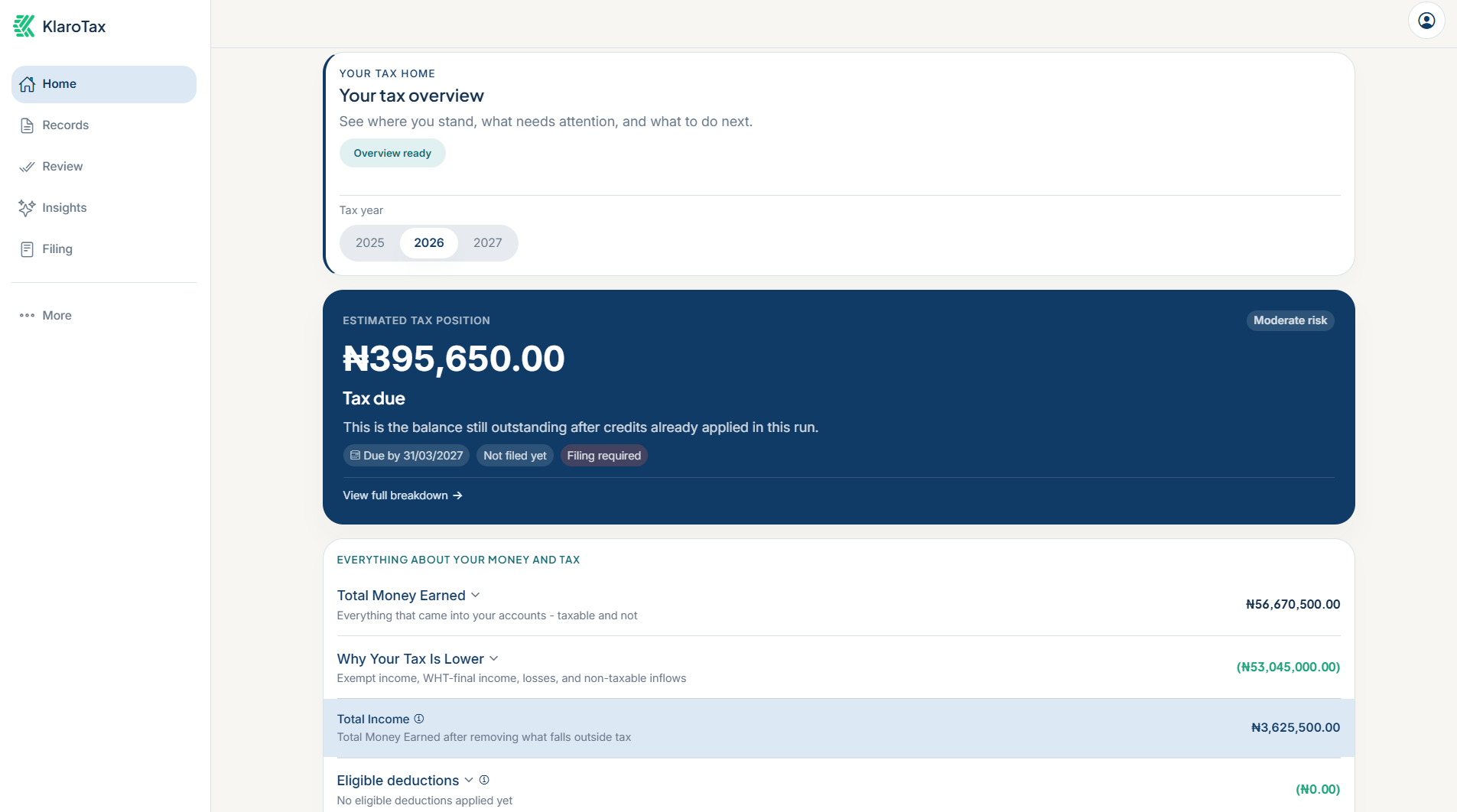
Your tax number isn't a guess. It's a calculation.
Most apps estimate. KlaroTax computes, using the exact rules from the Nigeria Tax Act 2025, step by step, with a full audit trail you can follow.
Why most people get their tax wrong
It isn't laziness, the tools just weren't built for Nigerian tax.
Excel spreadsheets
Built by a colleague three years ago. Uses rates that changed. Nobody knows if the formula is right.
WhatsApp advice
Well-meaning, but not personalised to your income structure. And the NTA 2025 changed things your contact may not know yet.
Online calculators
You enter a number and get a number back, with no explanation, no mention of deductions you might qualify for, and no trace of where the figure came from.
Accountant at filing time
Valuable, but expensive, and they see your data once a year. No ongoing visibility into your tax position month to month.
Six steps. Zero guesswork.
KlaroTax is not a tax calculator. It is the layer of clarity between your financial life and your obligations under the Nigeria Tax Act 2025.
Every KlaroTax computation follows the same deterministic sequence, the same one a tax professional would follow, but done in seconds.
We read your income — all of it
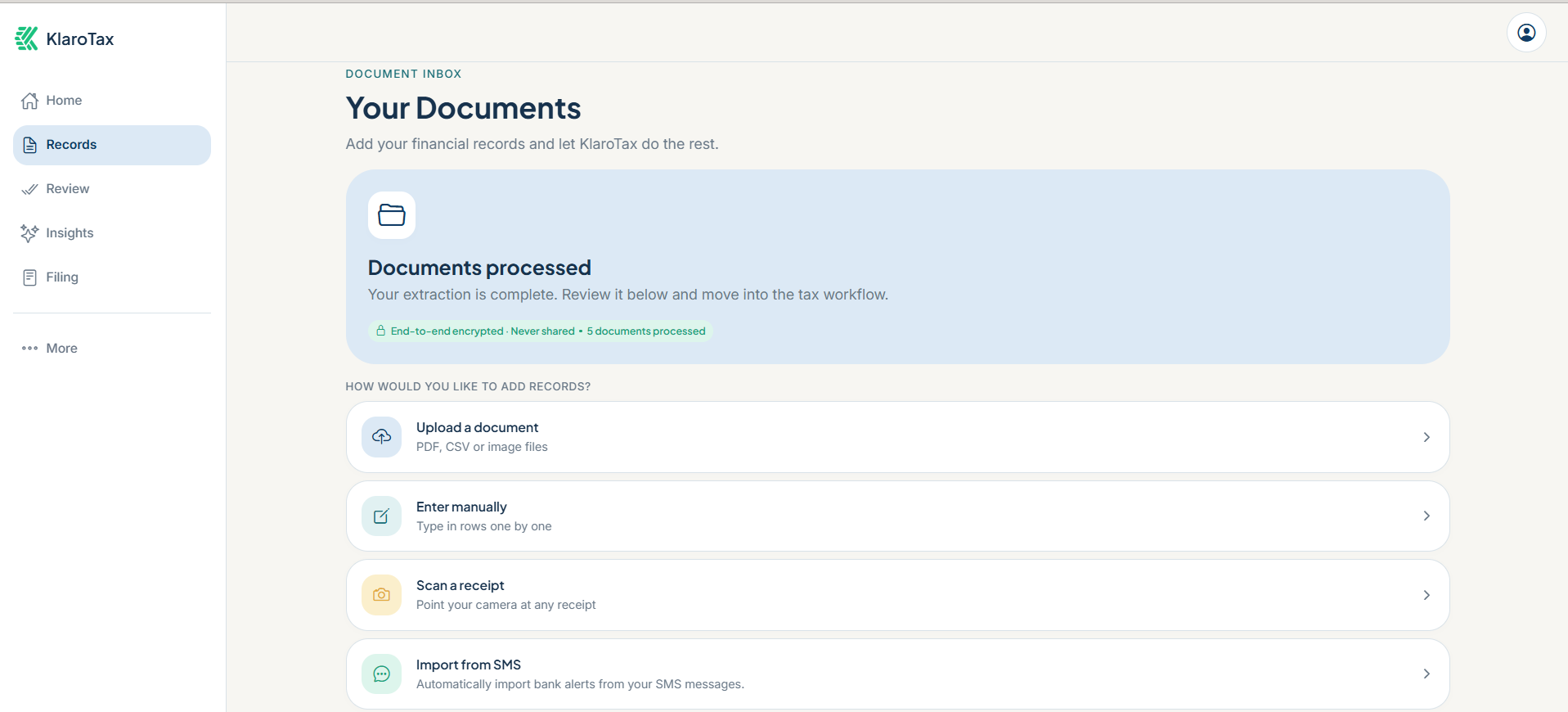
Upload your bank statement, payslip, or enter manually. KlaroTax identifies employment income, business income, investment income, and income that is fully exempt under the law, separately, not lumped together.
NTA 2025 — S.28, S.162We apply only the deductions you actually qualify for
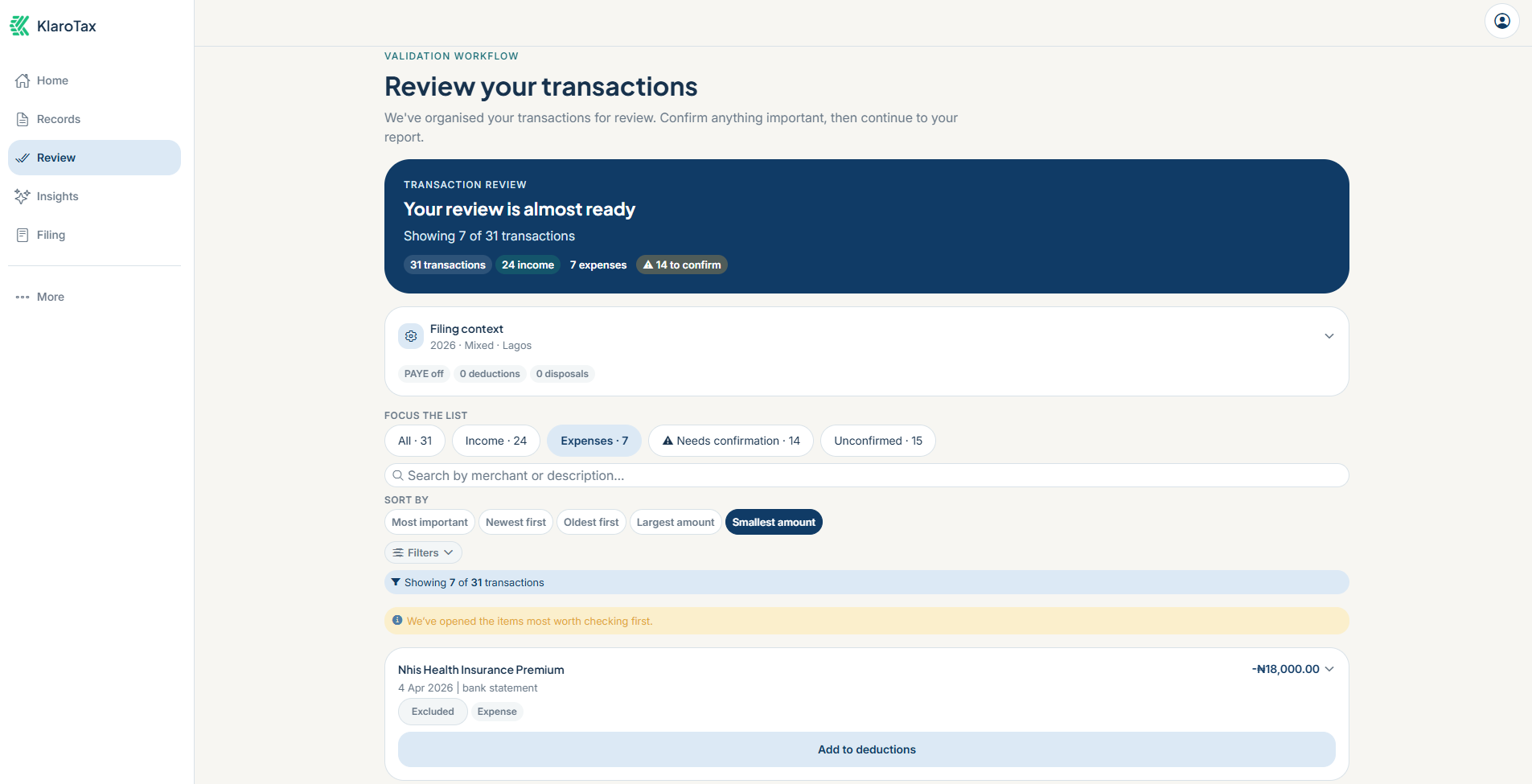
Pension contributions, NHF, NHIS, and business expenses are each checked against the statutory conditions. If you don't have the evidence, we flag it, we don't silently apply it and give you a lower number than you're entitled to claim.
NTA 2025 — S.33, S.21, NHF ActWe compute tax using the exact progressive bands
Not an average rate, not an estimate: the exact bands from the Nigeria Tax Act 2025 — ₦800,000 at 0%, then 7% on the next tranche, up through the bands, applied in order, as the law requires.
NTA 2025 — Third Schedule (PIT rates)We reconcile against what you've already paid via PAYE
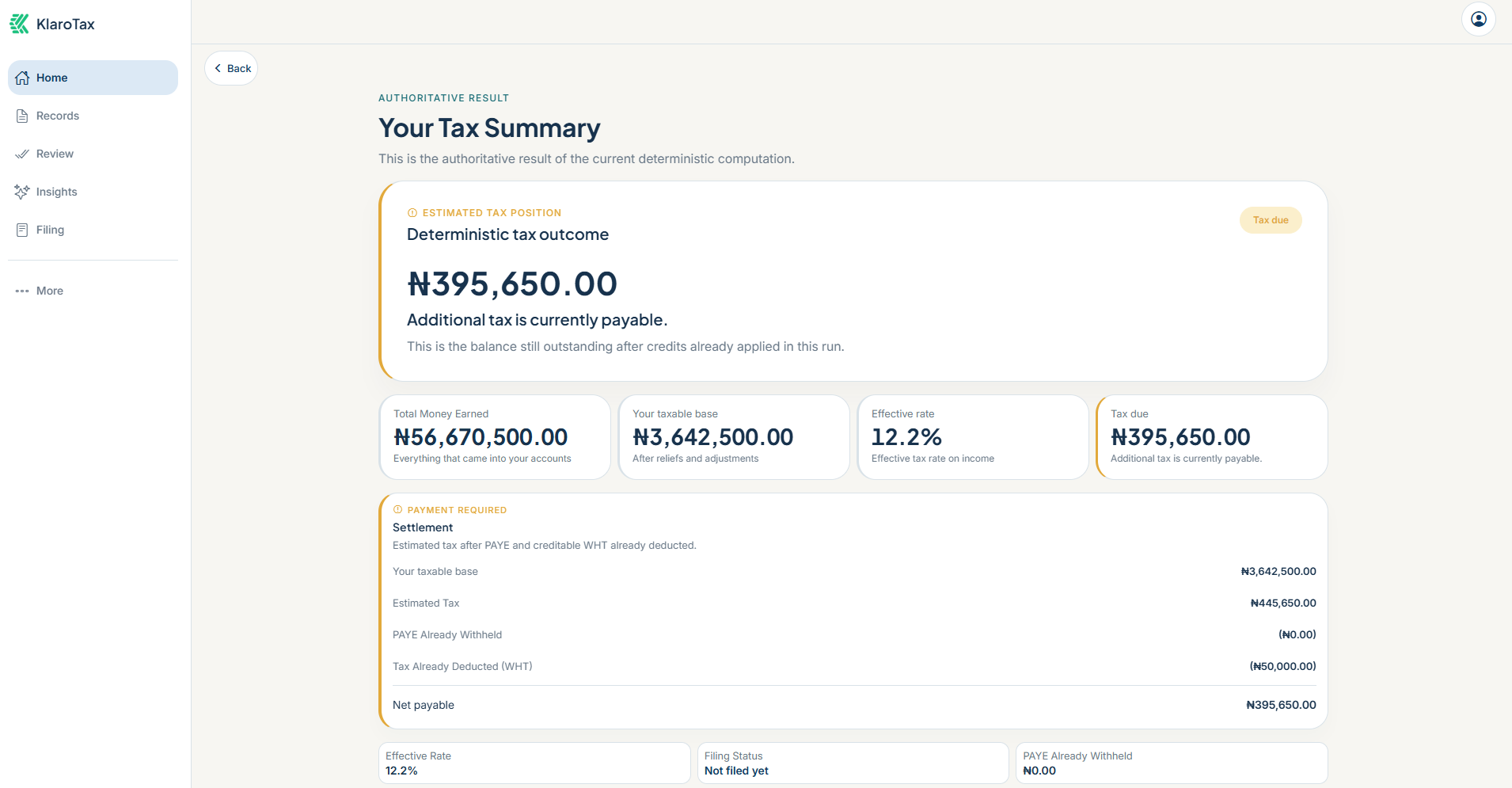
If your employer has been deducting tax, we compare what was deducted to what the law says should have been deducted. You see exactly whether you've overpaid or still owe.
NTA 2025 — S.81 (PAYE)We assess your filing readiness
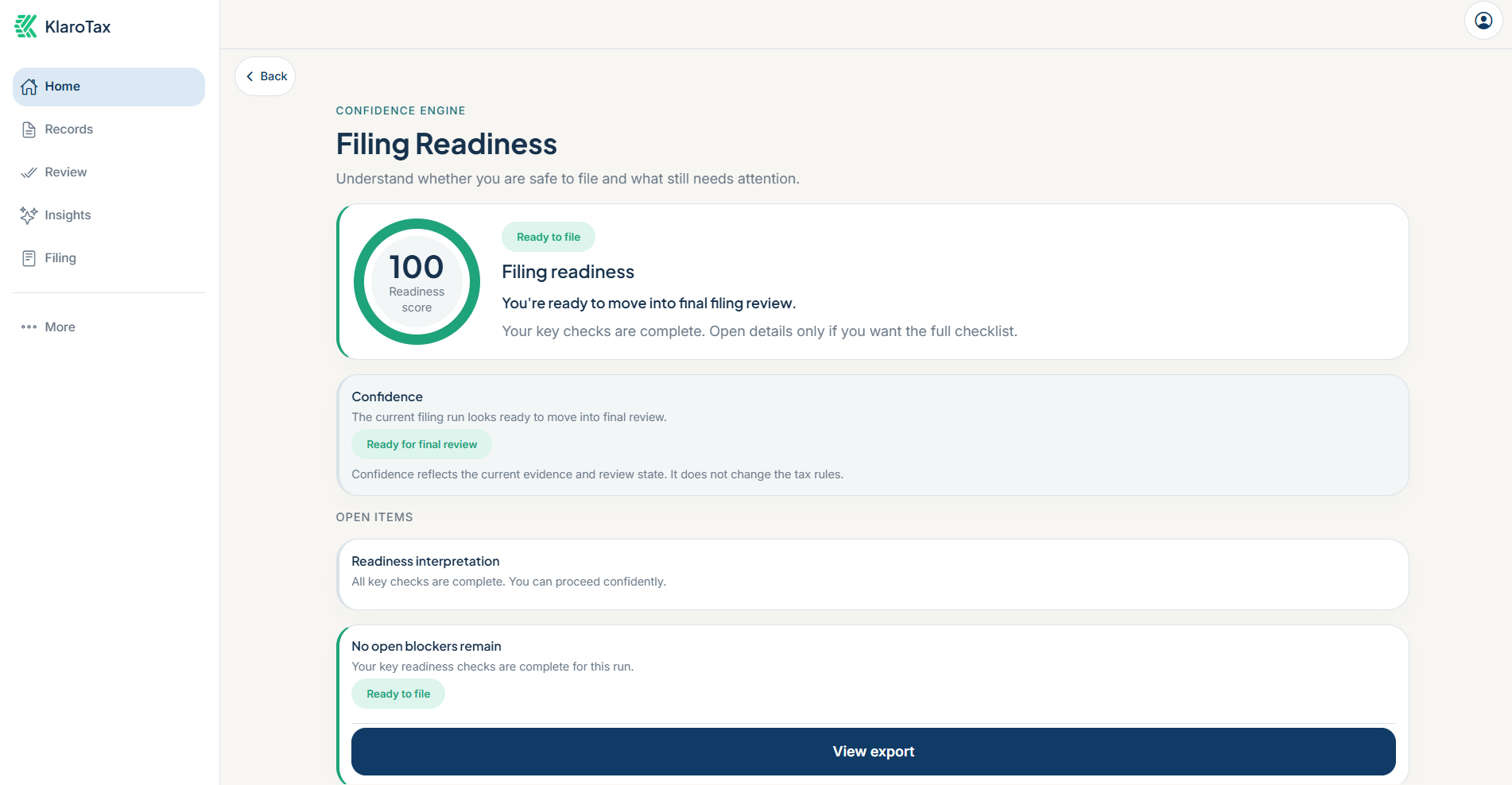
Before you touch the filing form, we tell you exactly what documents are missing, what evidence gaps remain, and what questions the NRS or your state revenue authority might ask.
NTAA 2025 — S.41 (self-assessment)We explain every figure in plain language
Every number in your summary links to the rule that produced it. "Why is my taxable income ₦4.2m?" — tap it and we show you the income that was included, what was deducted, and the statutory basis for each decision.
Every output is fully traceableDeterministic, not probabilistic
There's a word for how KlaroTax computes. It matters.
"For the same inputs, KlaroTax will always produce the same output, because it applies the same statutory rules in the same order, every time."— KlaroTax Deterministic Design Principle
This is different from how most financial apps work. Many use machine learning or heuristics, meaning their output changes depending on patterns in similar users' data. That's fine for budgeting. It's not acceptable for tax.
KlaroTax's tax engine has no model that "learns." The rules are the rules. The Nigeria Tax Act says pension contributions are deductible up to the relevant statutory limit. So that is exactly what KlaroTax applies, nothing more, nothing less.
Every computation carries a trace ID and ruleset version
"ruleset_id": "NTA_2026_V1",
"engine_version": "1.4.6.8",
"trace_id": "KTX-0000041892",
"computation_timestamp": "2026-05-19T09:14:32Z",
"chargeable_income": 4_200_000,
"total_tax_due": 441_000,
"effective_rate": 10.5,
"statutory_basis": "NTA 2025 Third Schedule"
}
Every computation is archived with this metadata. If the NRS ever asks how you arrived at your figure, you have the record.
We protect you by being honest about what we don't know
It would be easy to apply every deduction and give you the lowest possible tax number. We don't do that, because it could expose you in an audit.
Deductions applied and flagged
Deductions like NHF and pension are applied based on available information and clearly flagged on your readiness screen where supporting documentation is missing, so you know exactly what to gather before filing.
Conservative assumptions
When a rule is ambiguous or requires a manual review, we err on the side of caution, not on the side of giving you a lower number. Tax under-declaration carries penalties; we'd rather you overprepare.
Explicit confidence levels
Every income classification comes with a confidence level. "High confidence" means the rule is unambiguous. "Needs review" means a human should confirm before filing. We never hide uncertainty.
Full audit trail
Every computation is stored in an immutable archive, the inputs, the rules applied, the outputs. If your tax situation is ever questioned, you have a complete, timestamped record of how your figure was derived.
Statutory references on every line
Every deduction, exemption, and rate band references the specific section of the Nigeria Tax Act 2025 that authorises it. You are never asked to trust a black box.
Ruleset versioning
When tax rules change, we update the engine and version the ruleset. Computations made under the old rules carry their original version, so there's no ambiguity about which law applied when.
You probably have questions. Here are the honest answers.
Ready to know your actual tax position?
Join Nigerians who've stopped guessing and started computing.
Join the beta →